Can Chocolate Cause Precocious Puberty in Babies? The Truth Is…
- By : Jessica Jiayi W
When people are in a bad mood, many instinctively reach for a piece of chocolate to lift their spirits.
Whether this effect is due to chemistry or psychology is hard to say, but one thing is certain: chocolate often makes us feel better. As a result, it becomes a regular item at home—and children naturally develop a liking for it.
But this raises an important question: Can babies eat chocolate?
Many parents have concerns, mainly focused on the following points:
- Chocolate contains caffeine. Will it affect a child’s nervous system?
- Chocolate is high in calories and sugar. Could it cause obesity or tooth decay?
- Some people say chocolate can cause precocious puberty. Is there truth to this?
Let’s address these questions one by one.
Can Babies Eat Chocolate? A Clear Conclusion
Chocolate is not recommended for children under the age of three.
After age three, it can be eaten occasionally and in moderation.
Why?
This has everything to do with the characteristics of chocolate—mainly caffeine and free sugars.
Caffeine: How Much Is Too Much?
Chocolate naturally contains caffeine. According to data from the United States Department of Agriculture (USDA), different types of chocolate contain varying amounts of caffeine.
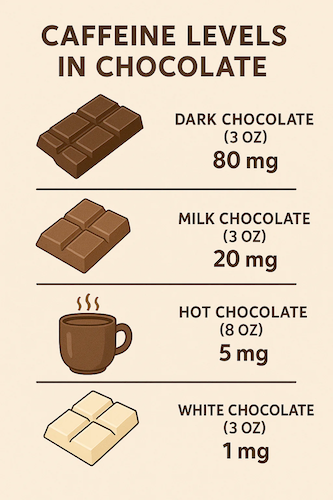
The European Food Safety Authority (EFSA) recommends that children and adolescents consume no more than 3 mg of caffeine per kilogram of body weight per day.
For example:
-
A child weighing 15 kg has a safe caffeine limit of
15 × 3 = 45 mg per day - This amount is roughly equivalent to just over 200 grams of milk chocolate
In other words, one or two small pieces of chocolate will not cause harm, as long as the child’s weight and age are appropriate.
Free Sugars: A Bigger Concern for Young Children
To improve taste, most chocolates contain added white sugar. The World Health Organization (WHO) clearly recommends that foods and beverages for children under three should not contain added free sugars.
Taking both caffeine and sugar into account, chocolate is only suitable when:
- A child’s weight reaches a certain level
- The child can safely consume foods containing free sugar
This is why three years old is generally considered a safer starting point.
If a one- or two-year-old has accidentally eaten a small amount, there’s no need to panic. Health risks come from long-term and excessive intake, not occasional exposure. Just avoid offering it regularly.
Does Chocolate Cause Precocious Puberty?
Chocolate itself does not directly cause precocious puberty.
The misconception likely comes from this chain reaction:
Excessive chocolate → Excess calorie intake → Obesity → Increased risk of precocious puberty
In other words, it’s obesity, not a specific substance in chocolate, that increases the risk.
This is why moderation is essential.
How Much Chocolate Is Appropriate?
Even after age three, chocolate should not be eaten freely.
Key principles:
- Occasionally: About once a week is enough
- In moderation: Around 5–10 grams per serving
Too much sugar and calories can:
- Harm dental health
- Increase the risk of overweight and obesity
- Lead to related health problems over time
How to Choose Healthier Chocolate for Children
Not all chocolates are created equal. When choosing chocolate for children, look beyond the price and focus on the ingredient list.
Ideally, chocolate should meet these three criteria:
-
Low sugar content
- Cocoa mass or cocoa butter should come before sugar on the ingredient list
-
High cocoa solids content
- Higher cocoa content usually means lower sugar and better quality
-
No cocoa butter substitutes
- These often contain oils that can produce trans fatty acids, which are difficult to metabolize and may increase the risk of obesity, heart disease, and thrombosis
It’s also best to choose plain chocolate rather than chocolate-flavored candies, filled chocolates, or fruit-flavored varieties, which often contain more additives and sugar.
One Last Important Reminder
After eating chocolate, make sure your child brushes their teeth thoroughly.
Melted chocolate easily sticks to the gaps between teeth. If not cleaned properly, it creates an ideal environment for cavities to develop.
Bottom Line
Chocolate doesn’t directly cause precocious puberty—but overconsumption can lead to obesity, which increases the risk.
For children over three, chocolate is fine occasionally, in small amounts, and with smart choices.